
It is 8:30 p.m. The pajamas are on, the teeth are brushed, and the lights are low. And yet your little one is wide awake, asking for water, another hug, one more story, and then one more after that.
If this sounds like your house, you are far from alone. Almost every parent of a toddler or preschooler has searched for how to get kids to go to sleep without a nightly standoff. The good news is that a calm, predictable bedtime routine for kids can turn the evening from a battle into one of the best parts of the day.
Here are seven gentle, practical tips to try this week.
1. Keep the Same Order Every Night
Children feel safe when they know what comes next. A simple sequence such as bath, pajamas, teeth, story, lights out works because the pattern itself becomes a signal that sleep is coming.
You do not need a long list. Three to five steps is plenty. What matters most is doing them in the same order, at roughly the same time, most nights of the week.
2. Start Winding Down Before Bedtime Begins
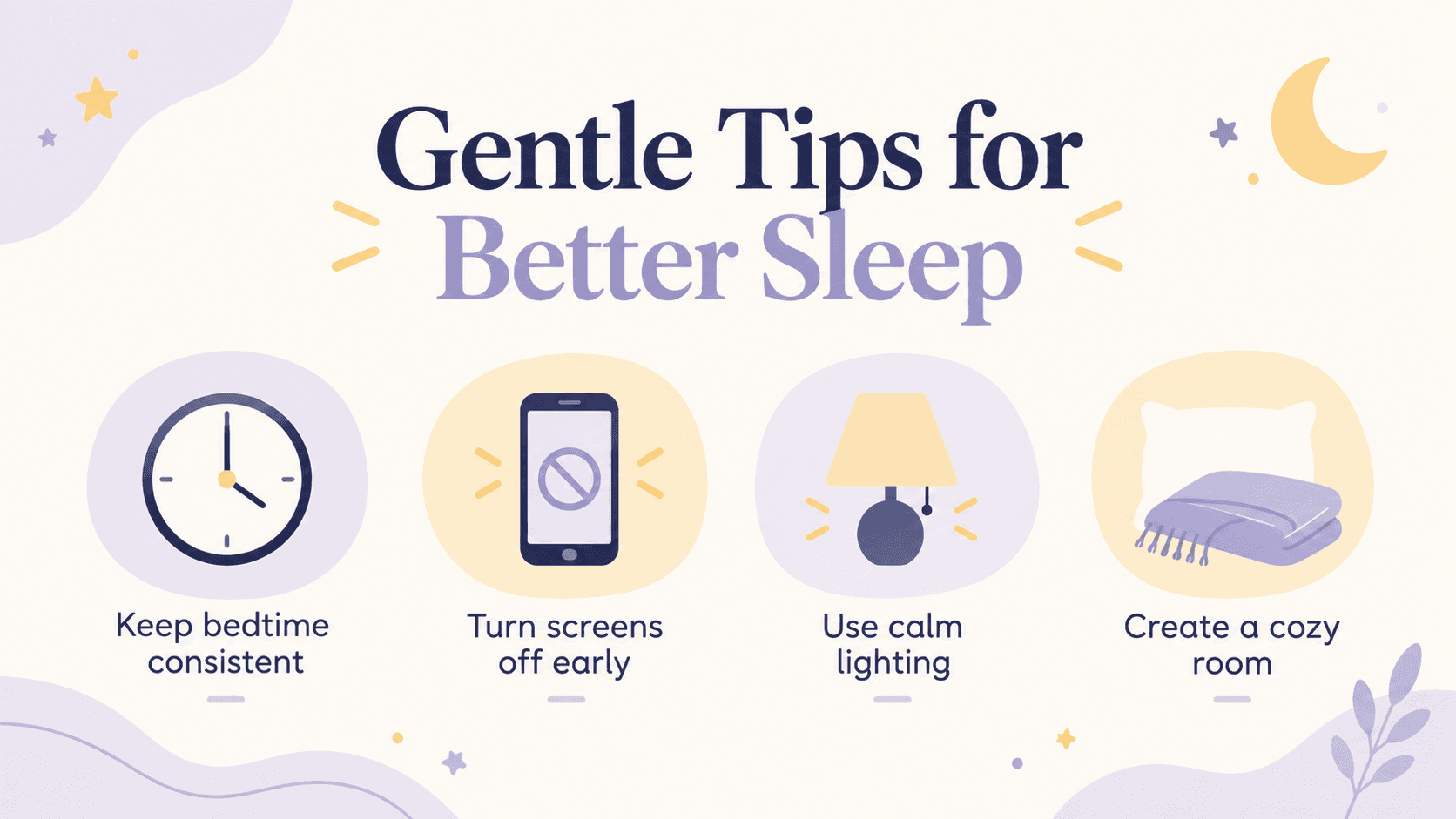
Kids who won’t sleep are often kids who were still running at full speed ten minutes ago. Try making the last 30 to 45 minutes before bed quieter than the rest of the day.
Swap loud games and chase for puzzles, coloring, building blocks, or soft music. Our free printable activity sheets make a nice quiet-time option for the hour before the routine starts.
3. Dim the Lights and Put Screens Away
Bright lights and screens can make it harder for young children to settle. Many families find it helpful to turn off tablets and TV at least an hour before bed and to use lamps instead of overhead lights in the evening.
If your child has trouble giving up screens, offer a clear and cheerful replacement: “When the show ends, it is story time!”
4. Make Story Time the Anchor of the Night
Reading together is one of the most comforting ways to end a day. It gives your child your full attention, a cozy closeness, and something calm to focus on instead of everything else going on in their busy little mind.
The best children’s bedtime books have a gentle rhythm, soft pacing, and a predictable ending. Rhyming books are especially good for this because the sing-song pattern naturally slows the pace of your voice and helps little ones relax.
5. Choose a Book About the Very Thing You Are Dealing With
Kids often understand their own feelings best when they see them in a story. If your child resists sleep, a book about a character who does the same thing can open the door to a friendly, pressure-free conversation.
That is exactly why counselor and author Sheri Sanderson wrote Billy Monkey Stays Up All Night. It is a rhyming bedtime picture book, written and illustrated by Sheri, made for children who just are not ready to say goodnight. If you are looking for bedtime books for kids who stay up late, it is a warm, funny place to start. It is available in paperback, hardcover, and ebook.
6. Give Your Child a Little Control
A lot of bedtime resistance is really a wish for independence. You can meet that need without giving up the routine by offering small choices:
- “Do you want the blue pajamas or the striped ones?”
- “Should we read the monkey book or the bear book tonight?”
- “Do you want to turn off the lamp, or should I?”
Choices like these help your child feel heard, and kids who feel heard tend to push back less.
7. Stay Calm, Kind, and Consistent When They Test the Rules
Even the best routine will have rough nights. If you are wondering how to get a toddler to stay in bed, the answer is usually patience and repetition. Walk your child back to bed calmly, keep your voice low and boring, and avoid turning it into a game or a long discussion.
Consistency over weeks matters far more than perfection on any single night. And if sleep problems are intense, last a long time, or seem tied to worry or fear, it is always a good idea to talk with your pediatrician or a child counselor.
A Simple Sample Routine You Can Try Tonight
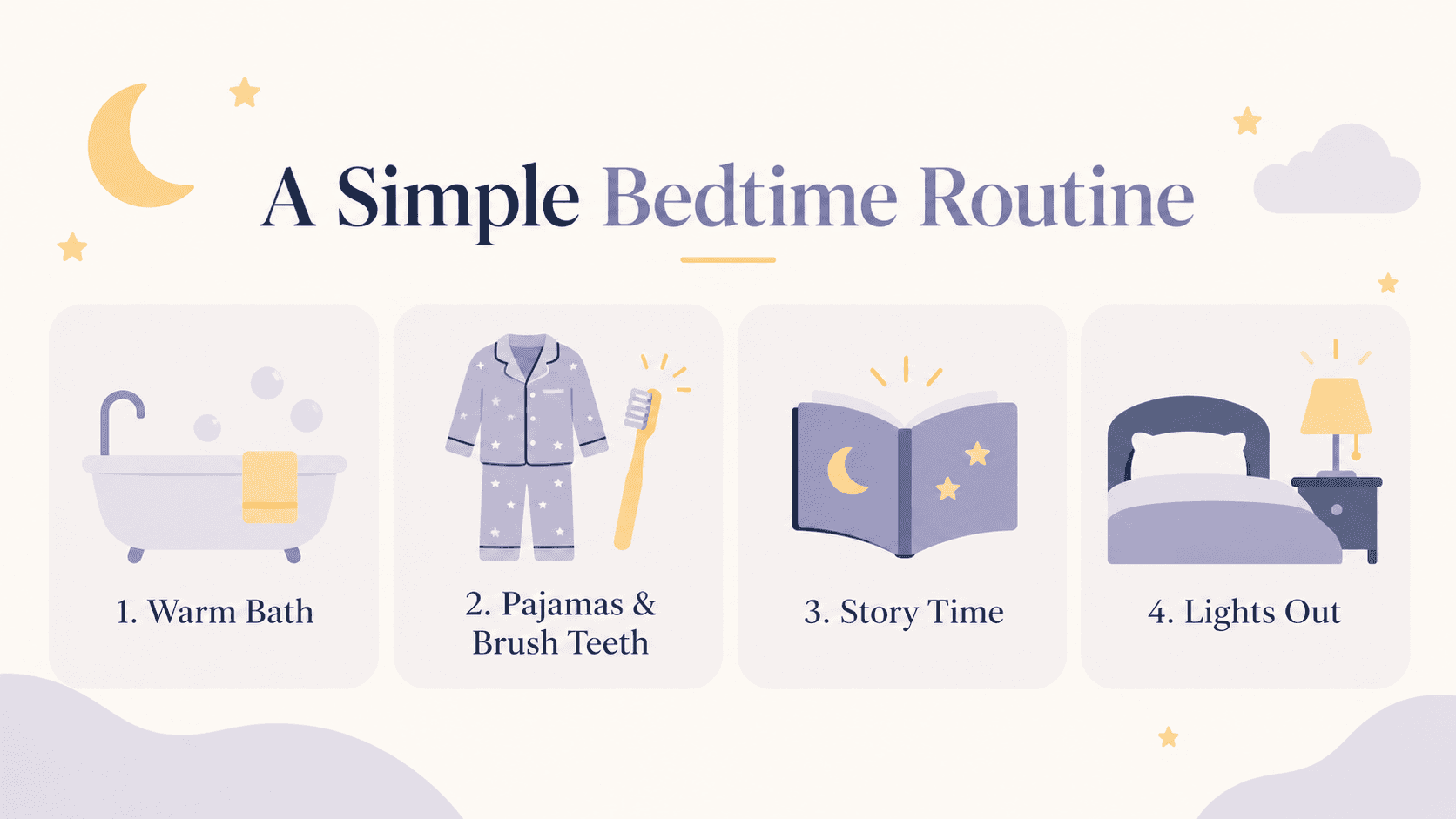
- 7:30 p.m. Quiet play or coloring
- 7:45 p.m. Bath and pajamas
- 8:00 p.m. Brush teeth, last sip of water, last trip to the bathroom
- 8:10 p.m. Cuddle up and read a bedtime story
- 8:25 p.m. Hugs, a short goodnight phrase, lights out
Adjust the times to fit your family. The pattern is what counts.
Why Rhyming Bedtime Stories Work So Well for Preschoolers
Rhyming stories for preschoolers do more than entertain. The repeating sounds help children predict what comes next, which feels safe and soothing. They also build early language skills, and many kids love joining in on the rhymes. By the time the last page arrives, the energy in the room has usually dropped to a gentle hush, which is exactly what you want at bedtime.
Make Bedtime Something to Look Forward To
The goal is not to force your child to sleep. It is to build a nightly rhythm that makes sleep feel natural, safe, and even a little bit special. With a steady routine, a quiet wind-down, and a favorite story, bedtime can become the sweetest part of the day for both of you.
Ready to try it tonight? Pick up a copy of Billy Monkey Stays Up All Night, grab a few of our free printable activities, and see how a little monkey business can help your child drift off to dreamland.
Does your child have a favorite bedtime ritual? We would love to hear it. Share it with our team on Instagram at @thebillymonkeybooks.